Built for Accuracy. Designed for Production.

Solving Common Hot Stamping Defects: Foil Flaking, Blistering, and Poor Adhesion
September 17, 2026
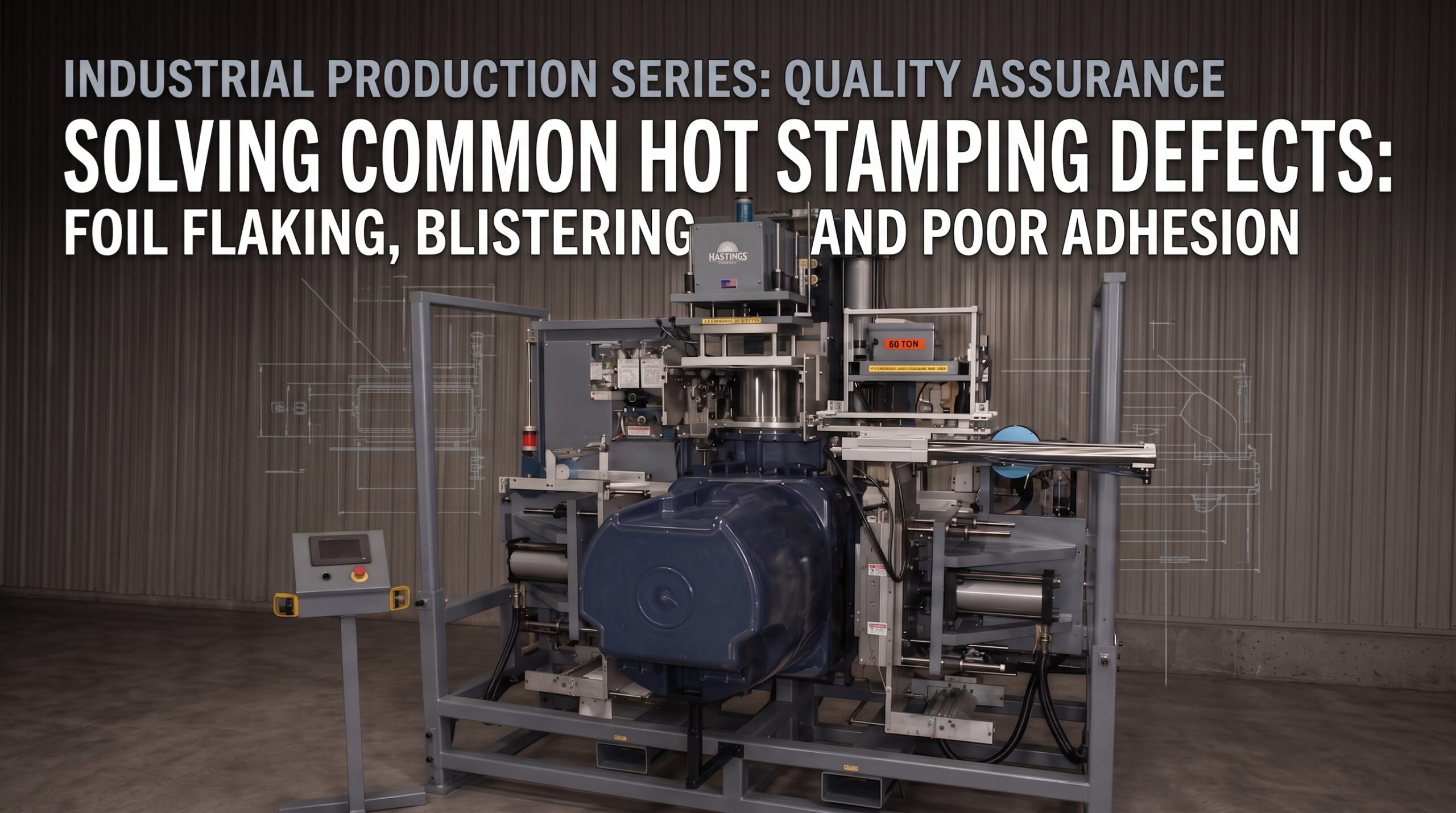
In the world of industrial decoration and part marking, hot stamping is a precise operation where thermal transfer, pressure, and time must perfectly align. When these variables drift out of specification, production suffers from costly rework, scrapped parts, and frustrating downtime.
This guide dives into the root causes of the most common hot stamping defects and provides actionable solutions for press operators and maintenance engineers to get their lines back to peak performance.
1. Foil Flaking Troubleshooting: Temperature and Pressure Dynamics
Foil flaking occurs when the metallic or pigmented layer of the foil fails to release completely from its carrier or breaks apart upon transfer, resulting in a jagged, incomplete image.
The Root Causes:
Flaking is almost always a symptom of insufficient energy transfer—either thermal or mechanical.
- Improper Tooling Temperatures: If the die temperature falls below the foil manufacturer’s recommended range, the adhesive sizing layer will not activate completely.
- Uneven Pressure: A lack of platen parallelism or uneven tonnage distribution means certain areas of the die do not press the foil firmly enough into the substrate.
The Solution:
Effective foil flaking troubleshooting begins with a thermal audit. Verify your heater cartridge performance using a calibrated pyrometer. Next, check the die for parallelism and incrementally adjust your press pressure settings to ensure a perfectly uniform strike.
2. Eliminating Foil Blistering: Managing Heat and Trapped Air
While flaking is caused by a lack of energy, blistering is typically caused by an excess of it. Blistering manifests as small bubbles or raised textures on the stamped image.
The Root Causes:
- Excessive Heat: Tooling temperatures that are too high can cause the foil’s release layer to vaporize too rapidly, or worse, cause the plastic substrate itself to outgas.
- Trapped Air: If the die geometry is perfectly flat and the strike is too fast, air can become trapped between the foil and the substrate, expanding under the heat of the die.
The Solution:
Lower the stamping temperature by 5°F to 10°F to see if the outgassing subsides. If the issue is trapped air, adjusting the press stroke speed or incorporating a slight crown (if using a silicone die) can help push air outward from the center of the stamp.
3. Resolving Hot Stamping Poor Adhesion
When the foil transfers visually but easily scratches off or fails a standard cross-hatch tape test, you are dealing with a critical adhesion failure.
The Root Causes:
- Incorrect Dwell Time: The heated die must remain in contact with the part long enough for the adhesive layer to melt and bond with the plastic. Too short of a dwell time prevents chemical cross-linking.
- Surface Energy Mismatches: To achieve a strong bond, the substrate’s surface energy must exceed the surface tension of the foil’s adhesive layer. If the plastic substrate is heavily loaded with mold release agents or is naturally low-energy (like Polypropylene), the foil simply cannot bite into the material.
The Solution:
First, increase your dwell time by fractions of a second to allow for proper adhesive flow. If hot stamping poor adhesion persists, audit your injection molding process for excessive mold release sprays. For a deeper dive into the science behind this, we highly recommend reviewing this authoritative resource on how surface energy governs polymer adhesion.
Engineered for Consistency: The H Series Advantage
Even with perfect parameter calculations, inconsistent, aging machinery will continually induce these defects. Process repeatability is the foundation of quality control.
This is where advanced pressing technology becomes your greatest asset. Our H Series Hydraulic Presses are engineered specifically to eliminate the variables that cause flaking, blistering, and adhesion failures. Featuring advanced PLC touchscreens and closed-loop tonnage controls, the H Series allows operators to dial in exact temperatures, micro-adjust dwell times, and apply perfectly distributed pressure on every single cycle. By taking the guesswork out of the machine’s mechanical capabilities, your operators can focus on production rather than constant troubleshooting.
Secure Your Production Quality Today
Don’t let calibration drift and outdated controls impact your bottom line. Regular auditing and precision equipment are the keys to a zero-defect hot stamping line.
Need assistance dialing in your process? Contact the Hastings Engineering Team today to schedule preventative maintenance, request a quote for custom tooling calibration, or discuss integrating a precision H Series press into your automation line.